
To Top
E3: Greenscreen Exercise (15/10/2020)
Exercise 1: Mindmap (20/10/2020)

In this Mindmap, i try to plan out a few aspects related to game development during study at a university.
E2: Game Mechanic (29/10/2020)
Dark Souls - Humanity System
In the Dark Souls games, you have several things to keep track of as you play, from your enemies to the world around you, but most importantly you need to pay attention to yourself: your Health Points (HP), your Stamina Points (SP), your Focus Points (FP) (the last one being exclusive to Dark Souls 3) and lastly your Humanity Counter (which isn't present in DS3). These are the things you should pay attention to the most. This next image points these out very clearly:
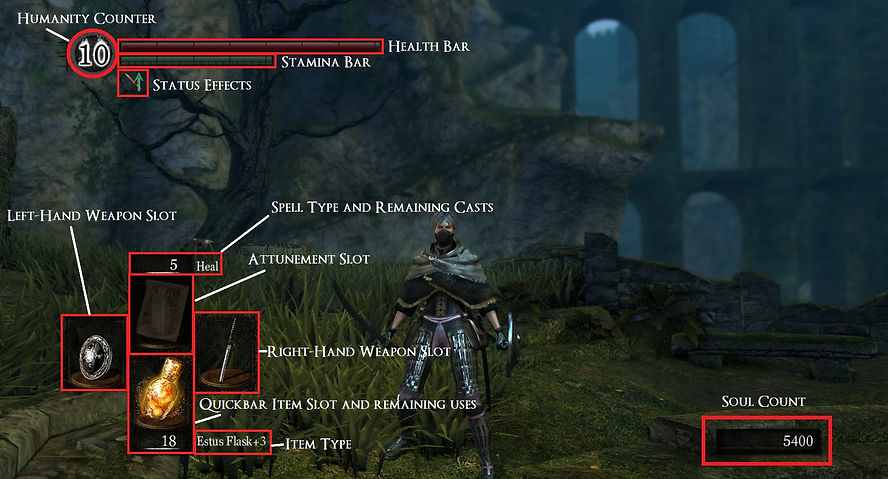

One of the most important aspects of Humanity and it's system is the narrative meaning it has.
To summarize, in the world of Dark Souls, when the player character dies, they don't die for good, but they come back having lost their humanity, which if not recovered, slowly affects their sanity, eventually leading to them becoming Hollow (almost like a zombie). This rings true in a gameplay sense, as when you die, your humanity count, if you have any, goes back to 0, which removes all the benefits it brings.
An improvement i would suggest is adding a Negative Humanity Count, making it so you would have negative effects applied to you if you didn't recover your humanity, for example, take all the positive effects Humanity brings and reverse them, or add a twist to them in some way. This would make the ''slowly losing their sanity'' bit more present during gameplay.
Note that the sanity part of the narrative is already, in a way, adressed in the game, as the more a player dies, they're more likely to give up, comparable to how the player character would lose their sanity completely, ending their journey.
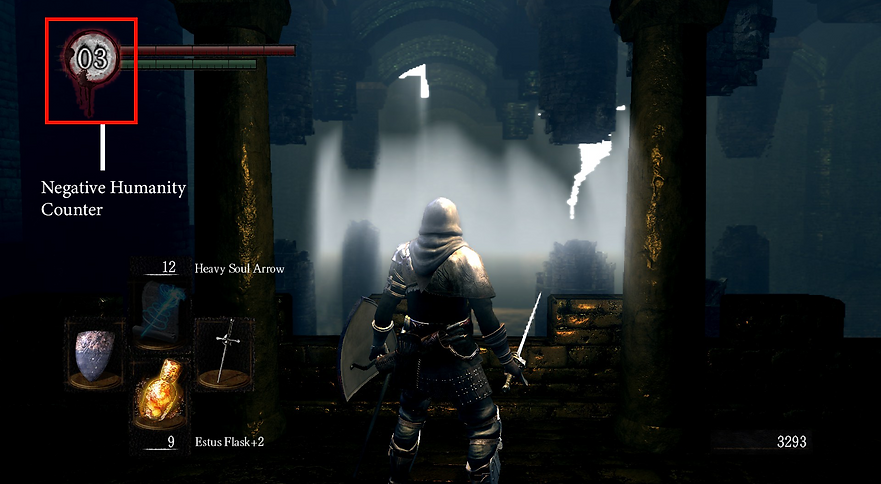

A Negative Humanity Counter that i quickly made on Photoshop. Doesn't look too shabby!
I've come up with a few negative stats myself, to give a better idea of how this system could work, some invertions of the positive benefits and some original:
- Negative Humanity would decrease the player character's Physical and Elemental Defenses;
- Negative Humanity doubles the effect of Curse (a satus effect that grants and instant kill if it reaches full effect), guaranteeing a quick death unless fully avoided;
- Negative Humanity decreases Item Discovery rate, making the chances of enemies dropping items lesser;
- Negative Humanity halves the effect of all healing items and spells;
- To recover from Negative Humanity, the player needs to spend 50% of their next level up price (which can become criplingly high) to clear it or an extremely rare item called Holy Tear Drop.
This was a brief analysis of this rule and how to improve it.
E3: Darkwood - Notable Game Rule (01/12/2020)


Short Description
Darkwood is a 2D horror game with a top-down view. It focuses on item crafting, resource management and stressful levels of strategizing and decision making, all set in forests populated by slavic inspired horrors. The gameplay consists of collecting resources and advancing in the game by day and hunkering down and surviving the night.
Game Rule
DON'T STAY OUT AT NIGHT
As mentioned before, the gameplay changes depending on the time of day. While the "survive the night" concept is far from original, Darkwood makes the concept as horrifying as possible. The way it does this is through visuals, audio design and how weak the player character is in a fight.
From 6:00 a.m to 8:00 p.m (a full ingame day lasts about 10 minutes, 4 of those being night), the player can explore the game world, collecting both resources to survive the night, these either being materials to fortify their hideout or items to help fight off invading monsters, and important items to either progress in side quests or the main campaign quest.
As soon as night falls, the player MUST be in their hideout, or their chances of surviving decrease drastically. During the night, monsters can try to invade the hideout, either through entering doors, windows or holes in the walls, which can be reinforced or blocked with furniture. This still doesn't stop monsters, as they can break down reinforced windows and doors and, with enough strength or numbers, can push furniture away, clearing a path. Note that some nights can be uneventful, but as the game goes on, this becomes a rarity.
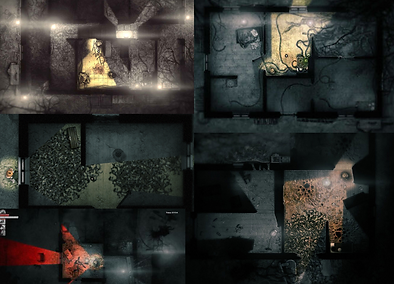
If the player does not make it to their hideout before nightfall, one of their only remaining strategies is to run through the forest with their flashlight/torch lit while avoiding monsters jumping out of the deep darkness. They can aim to run back to their hideout if they're close enough to it, but depending on the night, it might become impossible to defend against monster invasions.
This video demonstrates one of the nights more or less in the middle of the first chapter's progression.
This is a slightly uneventful night, only having the lights go out a few times, since darkness hurts the player, this is a serious threat, and 2 basic enemies invading the hideout by the end, but I feel that it shows the atmosphere of the night time in Darkwood very well.
In this video, you might notice what are called "Night events". These are random changes in the environment like changes to the player's flashlight's colour, from white to shades of red and orange, black shapes moving in the darkness, footstep sounds outside either the room the player is in or outside the hideout and dozens more, both visual and audio related. While harmless, these keep the player alert and might foreshadow incoming enemies, which may or may not appear, regardless of their foreshadowing.
These night events are especially effective for new players, which can't know what they mean and if they pose a danger.
E4: Essay - First draft (27/11/2020)
E5: Essay - Second draft (29/11/2020)
E6: Essay - Final draft (06/01/2021)
E7: Interaction Diagram - Geometry Dash (06/01/2021)
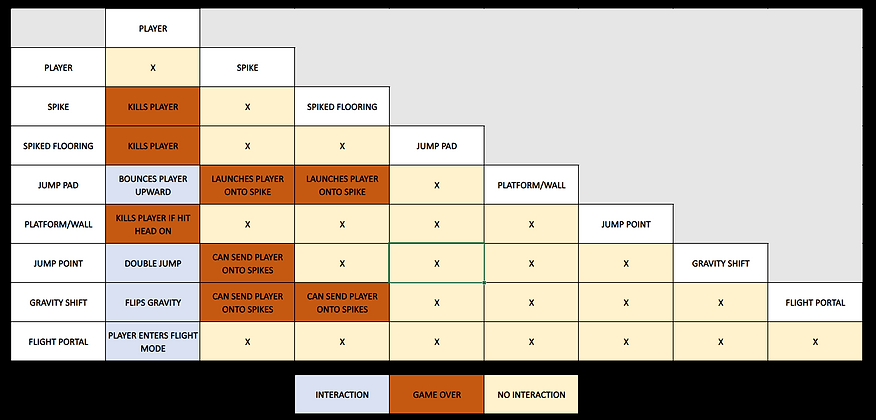
In this task, my objective was to create a diagram, using Excel, to show the interaction between certain elements of the game Geometry Dash, a platforming/music rythm game for mobile platforms and PC. Note that these are not all of the game's interacting or interactable elements, but I narrowed it down to the most notable.

1 - Player 2 - Spike 3 - Spiked Flooring 4 - Jump Pad 5 - Platform/Wall 6 - Jump Point 7 - Gravity Shift 8 - Flight Portal
E8: Vision Document (10/02/2021)
"The Family Monster" is a low-fantasy, very short 1st person horror game, being around 3-4 hours long. It features a single player story, targeted towards audiences 18 years old and up, of all genders and backgrounds. The game would be released to all major platforms, those being PC and consoles.
The game's narrative is focused on a little boy named Isaac, who gets dragged into a supernatural nightmare, forcing him to evade the grasp of the Scarecrow, a cruel spiritual manifestation of one of his ancestors. The objective of the game and the narrative is to survive the nightmare and uncover the mystery behind the monsters origin.
"The story, which is set in 1879, follows a little boy, 13 year old Isaac, who lives in a small farm with his father and mother off the northern coast of Ireland. They live a perfectly normal life for a family of their ilk, but inspite of the general comfort they live in, Isaac feels unhappy with this life, wanting to move to the bustling city and escape the isolation, this unhapiness not being bettered by the presence of the family scarecrow, which sits in their expansive cornfields. This scarecrow was built by Isaac's grandmother a few decades back, which gave him the impression that she was a crafty and resourceful woman, as it's held up through many decades and states of weather.
The scarecrow always seemed unnatural to Isaac, like it was watching him his entire life, but he never could really be sure and his parents just teased him about these observations of his, so he chalked it up to paranoia and his general unhappiness with the farm lifestyle.
Isaac's family has, as far as he knows, an "imperfect" past, one which he's not fully aware of, since his parents refuse to talk about his maternal grandparents. On top of this silence, the family barn has a basement that was filled with dirt a few years before Isaac's birth, it's contents adding to the mystery of the young boy's heritage.
He's lived with this scarecrow for his entire life, until one strange night, almost 2 weeks after his 13th birthday, where an unaturally strong storm hit his family's farm. The next morning, the family checks the damage and, surprisingly, not much damage was done, with the exception of the Scarecrow, which was struck multiple times, leaving merely a pile of ashes, sticks and burned clothing behind.
That night, the young boy goes to his creaky wooden bed relieved, realizing he won't have to worry about the Scarecrow's phantom stares anymore. He prepares for a good night's sleep, but as his conciousness slips away, he briefly feels an uncomfortable yet strangely familiar coldness wash over him. He's having a nightmare."
The game would have some focus on the number 13, which in many cultures is simbolic of bad luck, suffering and death. This number will have some significance to Isaac's heritage.
"The number 13 brings test, suffering and death. It symbolises death to the matter or to oneself and the birth to the spirit: the passage on a higher level of existence. In Tarot, no. 13 card is named as Death, but it mostly means death of a struggling period and new beginnings" - Wikipedia
The gameplay revolves around exploration and light puzzle solving, akin to games like Resident Evil, without the combat. Sections set in the real world would be focused on building the narrative up until the nightmare sections, which would involve more gameplay aspects, like the previously mentioned exploration and puzzle solving. Since it's an abstract reality, puzzles wouldn't involve much real-world logic, as the puzzle's revolve around Isaac's fears or his heritage. For example, a locked door wouldn't be opened using a key or finding a switch of some kind, but would instead be opened with an item of sentimental value or relevance to the boy, like a picture or other object.
Isaac's movement would be very basic. He can walk, run and crouch. The crouching would come in handy when hiding during exploration sections, where Isaac must find items to solve puzzles and progress, all the while being hunted by the Scarecrow, very similar to the mechanics of Mr. X in the remake of Resident Evil 2. As opposed to Mr. X, who would stalk you relentlessly, the Scarecrow can be tricked and led in the wrong direction, but it always loops around the map looking for the player. Throughout the few explorable areas, there would be enough hiding spots behind objects or structures to safely avoid the Scarecrow, but these wouldn't stop the Scarecrow from finding the player eventually.
The game present's various environments, all inkeeping with the late 1800's farm setting. From the real world, which shows an interesting location, that being a farm atop a cliff turned to the ocean, to the nightmare world, which presents twisting and abstract locations revolving around the boy's fears concerning his life's situation, things like the fear of isolation, his heritage and the Scarecrow. The nightmare setting includes an "ocean of corn stalks" as far as the eye can see, with small paths leading so smaller subsections with items and places of importance, including the family barn, it's secret underground tunnels leading to a hidden door in the main house, which would be much smaller and include a small event where the Scarecrow searches through rooms, in a scripted linear path, which would make avoiding him a puzzle in itself.
The whole game is similar in gameplay style to games like Outlast and the remake of Resident Evil 2.
Citing List:
Resident Evil 2 Remake (2019): https://store.steampowered.com/app/883710/Resident_Evil_2/ (Accessed on the 10th of February)
Outlast (2013): https://store.steampowered.com/app/238320/Outlast/ (Accessed on the 10th of February)
Bellow will be a few moodboards showing inspirations behind characters, environments and some assets/landmarks for the environment
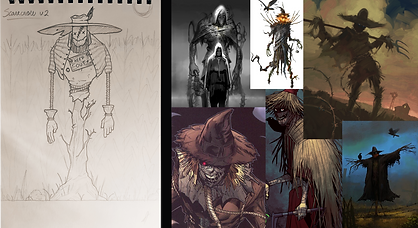
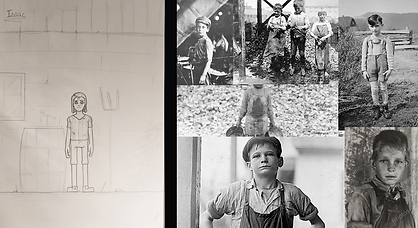
Scarecrow Moodboard
Isaac Moodboard

Farm Moodboard

Barn Moodboard

Tractor Moodboard
E9: GDD Analysis (08/02/2020)
For my GDD analysis, I chose to look at the Metal Gear Solid 2 Game Design Document. I chose this document out of many provided to the students.
Metal Gear Solid 2: Sons of Liberty, which was released in 2001, is the sequel to the original Metal Gear Solid, which releases in 1998. It later had an updated release called Metal Gear Solid 2: Substance. I consider myself a casual fan of the Metal Gear Franchise, but the chance to read the original vision for the first sequel by the franchise's creator, Hideo Kojima, was too tempting to pass up. After reading the document, it becomes very clear how this pitch was accepted by Konami, as it is rich in detail and in-depth descriptions of the game's content.
Right on the second page of the document is, what i consider, a very interesting aspect. On it, is a simplified plan of the development process, detailing things like "Analysis of PlayStation 2 evaluation-use graphics board" and "Begin PlayStation 2 basic research (acquire tools)", which shows that, the game being a an early next-gen title, the developers had to first come to grips with the new technology and it's tools. In the grand scheme of the document it's a minor detail, but i found it interesting enough to point out.
This GDD is packed full of detailed planning for every step of development and planned content, as expected for a sequel plan. In multiple pages, there's mention of keeping the "tone/spirit" of the Metal Gear franchise the same, a cold war inspired time setting, where both world governments and military powers seek power and control over each other, to fulfill their own visions. There's talk of keeping old players enticed with new characters and stories that inkeep with the franchise's spirit, while also taking risks to develop it's universe.
One more aspect i'd like to focus on is the paragraphs talking about the game's target audience. With the previous game presenting a rougher more traditionally masculine character, that being Solid Snake, primarily targeting male gamers who, according to ratings at the time, were attracted to "cooler" looking male characters, Kojima wanted the sequel to be geared more towards a broader audience, wanting to attract more female gamers with it's new protagonist Raiden, who had a softer, more sleek and athletic look.
Solid Snake


Raiden
Something to note about this document is that it's a Japanese to English translated file, so any potential grammatical errors or other faults must be put on the translator/s. That being said, the document lacks any grammatical errors, at least as far as i was able to tell, so it's a very well made game plan.
Overall, after reading this GDD, i can confidently say it's extremely well made, detailing a clear plan and vision for a game. as far as i know, i see nothing missing, which makes it very easy to envision a full game from this document alone.